

You’ve been training consistently. You’re putting in the miles, hitting the gym, following your program. But something feels off. Maybe your hip flexor keeps tightening up on long runs. Or, maybe your shoulder doesn’t feel quite right when you press overhead. Maybe you’re not recovering as quickly as you used to, or you’ve hit a plateau you can’t seem to break through.
Or maybe you’re dealing with a nagging injury that won’t fully resolve—IT band syndrome, plantar fasciitis, lower back pain, shoulder impingement. You’ve tried rest, ice, stretching, foam rolling. The pain improves for a while, then comes right back when you return to training.
Whether you’re a recreational runner training for your first 5K, an experienced marathoner chasing a PR, a CrossFit athlete, a powerlifter, or someone who simply loves strength training, your body needs to function optimally to perform at its best and stay injury-free.
At The Wellness Tribe in Denver, Colorado, we work with active individuals and athletes to optimize movement, enhance performance, prevent injuries, and support recovery. Our founder, Dr. Maggie McInnes, understands the demands of training and competition, and she brings a holistic, vitalistic approach to performance-based chiropractic care.
Why Athletes and Active People Seek Chiropractic Care
Athletic performance isn’t just about how hard you train—it’s about how well your body functions. Your nervous system coordinates every movement, every muscle contraction, every adaptation to training stress. And, your joints need to move through their full range of motion. Your spine needs to be stable yet mobile. Finally, your body needs to be balanced and symmetrical.
When everything is working optimally, you move efficiently, generate power effectively, recover quickly, and stay healthy. When something is off—even slightly—it can affect your performance, increase your injury risk, and limit your potential.
Common Reasons Active People Come to The Wellness Tribe
Injury prevention. Many athletes seek chiropractic care proactively, not because they’re injured, but because they want to stay healthy. Regular adjustments help maintain optimal alignment, identify and address imbalances before they become injuries, and keep the nervous system functioning at its best.
Performance optimization. When your body is aligned and moving well, you can generate more power, move more efficiently, and perform at a higher level. Many athletes notice improvements in strength, speed, endurance, and coordination with regular chiropractic care.
Recovery support. Training creates stress on your body—that’s how you get stronger. But recovery is where the adaptation happens. Chiropractic care supports your body’s ability to recover by reducing muscle tension, improving circulation, supporting nervous system balance, and helping your body adapt to training stress.
Injury management and rehabilitation. If you’re dealing with an injury, chiropractic care can be part of your recovery plan. We don’t just address the site of pain—we look at your entire body to understand why the injury happened and what needs to change to prevent it from recurring.
Breaking through plateaus. Sometimes performance plateaus aren’t about your training program—they’re about how your body is functioning. Addressing restrictions, imbalances, and nervous system interference can help you break through barriers and reach new levels of performance.
How Chiropractic Care Supports Runners
Running is one of the most accessible forms of exercise, but it’s also one of the most demanding on your body. Every mile you run involves thousands of foot strikes, each one sending force through your feet, ankles, knees, hips, pelvis, and spine. Over time, even small imbalances or restrictions can lead to overuse injuries.
Common Running Injuries We See
IT band syndrome. That sharp pain on the outside of your knee that shows up a few miles into your run? IT band syndrome is one of the most common running injuries, and it’s often related to hip weakness, poor pelvic alignment, and compensation patterns.
Chiropractic care can help by addressing pelvic and hip alignment, releasing tension in the hip and thigh muscles, identifying and correcting movement patterns that contribute to IT band stress, and working collaboratively with physical therapy to strengthen weak muscles.
Plantar fasciitis. Heel pain that’s worst in the morning or after periods of rest can be debilitating for runners. While plantar fasciitis involves inflammation of the plantar fascia on the bottom of the foot, it’s often connected to issues higher up the kinetic chain—tight calves, restricted ankle mobility, poor foot mechanics, or even pelvic misalignment.
We look at your entire lower body to understand why your plantar fascia is overloaded and address the root causes, not just the symptoms.
Runner’s knee (patellofemoral pain syndrome). Pain around or behind the kneecap is another common complaint among runners. It’s often related to how your kneecap tracks as you run, which is influenced by hip strength, pelvic alignment, foot mechanics, and quadriceps and hamstring balance.
Chiropractic adjustments to the pelvis, hip, knee, and ankle can help restore optimal alignment and movement patterns, reducing stress on the knee joint.
Lower back pain. Running is a repetitive impact activity, and if your pelvis, hips, or spine aren’t moving well, that impact can accumulate and lead to lower back pain. Core weakness, poor running form, and pelvic imbalances all contribute to back pain in runners.
We assess your spinal alignment, pelvic stability, and movement patterns to identify what’s contributing to your pain and create a plan to address it.
Hip pain and hip flexor tightness. Runners often develop tight hip flexors and hip pain from the repetitive hip flexion motion of running. When your hip isn’t moving through its full range of motion, other areas compensate, leading to pain and dysfunction.
Chiropractic adjustments to the hip and pelvis, combined with soft tissue work and targeted stretching and strengthening, can help restore hip mobility and function.
Achilles tendinopathy. Pain and stiffness in your Achilles tendon can sideline you from running for weeks or months if not addressed properly. Achilles issues are often related to calf tightness, poor ankle mobility, foot mechanics, and training errors.
We help identify the factors contributing to your Achilles pain and support your recovery with adjustments, soft tissue work, and guidance on training modifications.
How We Help Runners at The Wellness Tribe
Comprehensive movement assessment. We don’t just look at where it hurts—we assess how you move. We look at your gait, your posture, your joint mobility, and your movement patterns to understand what’s contributing to your injury or limiting your performance.
Spinal and extremity adjustments. We adjust not just your spine, but also your hips, knees, ankles, and feet to ensure optimal alignment and mobility throughout your entire kinetic chain.
Soft tissue work. Tight, restricted muscles and fascia can limit your movement and contribute to injury. We use soft tissue techniques to release tension and improve tissue quality.
Strengthening and mobility exercises. We provide targeted exercises to address weaknesses and restrictions that are contributing to your injury or limiting your performance. Strong, mobile, balanced runners are healthy runners.
Training guidance. We can help you understand appropriate training loads, recovery strategies, and how to modify your training when dealing with an injury.
Collaboration with other providers. If you’re working with a running coach, physical therapist, or other healthcare providers, we’re happy to collaborate to ensure you’re getting comprehensive, coordinated care.
How Chiropractic Care Supports Strength Athletes
Whether you’re into CrossFit, Olympic weightlifting, powerlifting, bodybuilding, or general strength training, the demands you place on your body are significant. Heavy loads, explosive movements, high training volumes—all of these require optimal body mechanics, joint mobility, and nervous system function.
Common Issues We See in Strength Athletes
Shoulder pain and impingement. Overhead pressing, heavy bench pressing, pull-ups, and Olympic lifts all place significant stress on the shoulder joint. If your shoulder blade isn’t moving properly, if your thoracic spine is restricted, or if your shoulder joint isn’t aligned well, you’re at increased risk for pain and injury.
We assess shoulder mechanics, thoracic spine mobility, rib position, and scapular (shoulder blade) movement to identify restrictions and imbalances. Adjustments to the thoracic spine, ribs, and shoulder, combined with mobility work and corrective exercises, can help you lift pain-free and reduce injury risk.
Lower back pain from squats and deadlifts. Squatting and deadlifting are foundational strength movements, but they also expose any weaknesses or imbalances in your body. Lower back pain during or after these lifts is often related to poor hip mobility, pelvic misalignment, core weakness, or improper bracing techniques.
We help you identify and address the root causes of your back pain so you can continue training safely and effectively. Often, improving hip and pelvic alignment makes a dramatic difference in how your back feels during heavy lifts.
Hip pain and hip impingement. Deep squatting requires excellent hip mobility. If your hip joint isn’t moving through its full range of motion, you might experience pinching, clicking, or pain in the front of your hip. This can be related to hip joint restrictions, tight hip flexors, weak glutes, or poor squat mechanics.
Chiropractic adjustments to the hip and pelvis, combined with mobility work and strengthening, can help restore pain-free, deep squatting ability.
Wrist and elbow pain. Front squats, clean and jerks, and heavy pressing can all create stress on your wrists and elbows. Pain in these areas is often related to poor wrist or elbow mobility, shoulder restrictions causing compensation, or improper technique.
We can assess and adjust your wrists, elbows, and shoulders to improve joint function and reduce pain.
Thoracic spine stiffness. A stiff mid-back (thoracic spine) affects almost every lift you do. It limits your ability to get into a good front rack position for front squats and cleans, it affects your overhead pressing mechanics, and it can contribute to shoulder and neck pain.
Thoracic spine adjustments and mobility work can make a significant difference in how you move and how you feel during training.
Rib subluxations. Heavy lifting, especially movements that involve significant trunk rotation or bracing, can sometimes cause ribs to shift out of their normal position. This can create sharp pain with breathing, twisting, or certain movements. Rib adjustments typically provide quick relief.
How We Help Strength Athletes at The Wellness Tribe
Movement screening and assessment. We assess your squat, hinge, pressing, and pulling patterns to identify restrictions, asymmetries, and movement compensations that might be limiting your performance or increasing injury risk.
Spinal and extremity adjustments. We ensure all the joints in your body—spine, hips, shoulders, elbows, wrists, ankles—are moving optimally so you can lift with good mechanics and without compensation.
Mobility work. We identify specific mobility restrictions that are affecting your lifts and provide targeted strategies to improve them.
Strengthening and stability work. Strong, stable joints are healthy joints. We provide exercises to build strength in areas that need it and improve your overall stability.
Form coaching and technique guidance. While we’re not strength coaches, we can provide insights into how your body mechanics are affecting your lifting and offer suggestions for technique modifications that might reduce stress on painful or vulnerable areas.
Recovery strategies. We help you understand how to support your body’s recovery between training sessions so you can train hard and stay healthy.
The Performance Benefits of Chiropractic Care
Beyond injury prevention and management, many athletes notice tangible performance improvements with regular chiropractic care.
Improved Range of Motion and Flexibility
When your joints are aligned and moving properly, you can achieve better positions in your lifts and running stride. Better squat depth, better overhead position, better hip extension while running—all of these can improve with better joint mobility.
Research published in the Journal of Chiropractic Medicine found that chiropractic adjustments improved range of motion in athletes.
Enhanced Power Output and Strength
When your nervous system is functioning optimally and your body is aligned, you can recruit muscles more efficiently and generate more force. Some research suggests that chiropractic care may improve muscle strength and power output.
A study in the Journal of Manipulative and Physiological Therapeutics found that chiropractic adjustments resulted in increased voluntary muscle strength in the lower extremities.
Better Coordination and Body Awareness
Chiropractic adjustments affect proprioception—your body’s sense of where it is in space. Better proprioception means better coordination, balance, and movement control.
Faster Recovery
When your nervous system is balanced and your body is functioning well, you recover more effectively from training. This means you can train more consistently and make progress more quickly.
Reduced Injury Risk
By addressing imbalances, restrictions, and compensation patterns before they lead to injury, regular chiropractic care can help you stay healthy and training consistently.
A study in BMC Musculoskeletal Disorders found that athletes receiving chiropractic care had fewer injuries and lost less training time to injury.
What to Expect: Performance-Based Chiropractic Care at The Wellness Tribe
When you come to The Wellness Tribe for performance-based care, we take a comprehensive, individualized approach.
Initial Assessment
We’ll start by understanding your training—what you’re doing, how often, what your goals are, and what challenges you’re facing. We want to know what movements or activities create pain, what you’ve tried so far, and what you’re hoping to achieve.
We’ll perform a thorough assessment of your movement patterns, joint mobility, spinal alignment, and nervous system function. For runners, this might include gait analysis. For strength athletes, we might assess your squat, deadlift, or overhead positions.
We’ll identify restrictions, imbalances, and areas of dysfunction that are contributing to your pain or limiting your performance.
Treatment and Care Plan
Based on our assessment, we’ll create a personalized care plan. This typically includes:
Chiropractic adjustments to restore optimal alignment and joint mobility throughout your spine and extremities.
Soft tissue work to release muscle tension and improve tissue quality.
Corrective exercises to strengthen weak areas and improve mobility in restricted areas.
Training modifications if needed to support your recovery while keeping you as active as possible.
Education on recovery strategies, injury prevention, and how to support your body’s optimal function.
Ongoing Support
How often you come in depends on your individual needs and goals. Some athletes come in regularly as part of their training routine—weekly or bi-weekly during heavy training phases. Others come in as needed when they’re dealing with pain or preparing for a competition.
We work with you to create a care plan that fits your schedule, your goals, and your body’s needs.
Real Stories from Denver Athletes
“I’ve been running for years, but I kept getting sidelined by IT band pain. I’d rest, it would get better, then as soon as I ramped up my mileage, it would come right back. After working with The Wellness Tribe, we discovered my pelvis was misaligned and my hips were really weak on one side. The adjustments combined with the strengthening exercises made a huge difference. I just ran my first marathon pain-free.” — Chris, Denver
“As a CrossFit athlete, I put my body through a lot. I started seeing The Wellness Tribe for regular maintenance care, and I’ve noticed I recover faster, I move better, and I’ve had fewer injuries. My overhead position improved significantly after we worked on my thoracic spine mobility.” — Jenna, Highlands Ranch
“I’m a powerlifter, and I was dealing with chronic lower back pain that was affecting my squat and deadlift. I’d tried everything—different belts, form tweaks, stretching. Working with Dr. Maggie, we found that my hips were really restricted and my pelvis was rotated. After a few weeks of adjustments and mobility work, my back pain decreased dramatically and my lifts actually improved.” — Marcus, Littleton
“I’m not a competitive athlete, but I love strength training and I want to keep doing it for as long as possible. Regular chiropractic care helps me stay healthy, move well, and keep progressing in the gym. It’s become an essential part of my routine.” — Sarah, Denver
The Research Behind Performance-Based Chiropractic Care
Athletic performance and chiropractic care have been studied extensively:
Improved range of motion. Multiple studies show that chiropractic adjustments can improve joint mobility and range of motion. A study in the Journal of Chiropractic Medicine found significant improvements in hip and shoulder range of motion following chiropractic care.
Increased muscle strength. Research suggests chiropractic adjustments can increase voluntary muscle strength. A study in the Journal of Manipulative and Physiological Therapeutics found that spinal manipulation increased lower extremity muscle strength.
Enhanced athletic performance. Some studies show improvements in athletic performance measures. A study in Chiropractic & Osteopathy found that athletes receiving chiropractic care showed improvements in performance outcomes.
Reduced injury rates. Athletes receiving regular chiropractic care may experience fewer injuries. A study in BMC Musculoskeletal Disorders found reduced injury rates and improved recovery times in athletes receiving chiropractic care.
Improved proprioception and coordination. Chiropractic adjustments can improve proprioceptive function. Research in the Journal of Manipulative and Physiological Therapeutics found that spinal manipulation improved sensorimotor function.
Pain reduction in athletes. Chiropractic care is effective for managing common athletic injuries. A systematic review in the Journal of the Canadian Chiropractic Association found evidence supporting chiropractic care for sports-related injuries.
Integrating Chiropractic Care Into Your Training
Chiropractic care works best when it’s integrated into your overall training and wellness routine, not treated as an isolated intervention.
During Base Building and General Training
Regular adjustments during base building phases can help ensure your body is moving optimally as you build fitness and strength. This is a great time to address any restrictions or imbalances before they become problems during higher-intensity training.
During High-Volume or Intense Training Phases
When you’re pushing hard—training for a race, preparing for a competition, or going through a challenging training block—your body is under significant stress. More frequent chiropractic care during these phases can support recovery and help you stay healthy.
During Taper and Competition Preparation
As you reduce training volume before a competition, chiropractic care can help ensure your body is functioning optimally. Many athletes find that adjustments help them feel “dialed in” and moving well going into competition.
During Injury Recovery
If you’re dealing with an injury, chiropractic care can be part of your rehabilitation plan, working alongside physical therapy, rest, and training modifications to support your recovery.
Year-Round Maintenance
Many athletes benefit from regular maintenance care even during off-seasons or recovery periods. This proactive approach helps prevent injuries before they start and keeps your body functioning at its best.
Beyond Adjustments: A Holistic Approach to Performance
At The Wellness Tribe, we take a holistic, vitalistic approach to athletic performance. While adjustments are a powerful tool, optimal performance comes from supporting your whole body and lifestyle.
Nutrition. What you eat fuels your training, supports recovery, and affects inflammation, energy levels, and body composition. We can provide guidance on nutrition strategies that support your performance goals.
Sleep. Sleep is when your body adapts to training stress, repairs tissues, and consolidates learning. Poor sleep undermines your training. We help you optimize sleep quality and quantity.
Stress management. Chronic stress affects your nervous system, hormones, recovery, and performance. We help you recognize signs of overtraining and provide strategies for managing stress.
Recovery strategies. We educate you on evidence-based recovery methods—active recovery, proper warm-ups and cool-downs, hydration, and more.
Training load management. We help you understand how to progress your training appropriately to minimize injury risk while maximizing adaptation.
Common Questions from Athletes
How often should I get adjusted?
This depends on your training volume, injury history, and goals. Some athletes benefit from weekly or bi-weekly adjustments during heavy training. Others come in monthly for maintenance. We’ll work with you to find the right frequency for your needs.
Should I get adjusted before or after training?
Both can be beneficial. Some athletes prefer adjustments before training or competition to optimize movement and nervous system function. Others prefer post-training adjustments to support recovery. We can help you determine what works best for you.
Can I train the same day I get adjusted?
Usually, yes. Most people feel great after adjustments and can train normally. Occasionally, if we do significant soft tissue work or address a particularly restricted area, we might suggest modifying your training that day.
Will chiropractic care make me faster/stronger?
Chiropractic care optimizes how your body functions. When your body is aligned, moving well, and your nervous system is functioning optimally, you’re able to perform at your best. Many athletes notice improvements in performance, but individual results vary.
I’m injured. Should I stop training completely?
Not necessarily. In many cases, you can continue training with modifications while you recover. We’ll work with you to determine what’s safe and appropriate for your specific situation.
Do I need a referral?
No. You can schedule directly with us. If you’re working with other healthcare providers or coaches, we’re happy to collaborate with them.
When to Seek Chiropractic Care
Consider scheduling a consultation if you’re:
- Dealing with a nagging injury that won’t fully resolve
- Experiencing pain during or after training
- Noticing asymmetries or imbalances in your movement
- Hitting a performance plateau
- Preparing for a race or competition
- Wanting to optimize your performance and prevent injuries
- Recovering from an injury and want to return to training safely
- Looking for a holistic approach to athletic performance
You don’t need to be injured to benefit from chiropractic care. Many athletes see us regularly as part of their proactive performance and injury prevention strategy.
Why Choose The Wellness Tribe for Performance-Based Care?
At The Wellness Tribe in Denver, Colorado, we understand the demands of training and competition. Our founder, Dr. Maggie McInnes, is passionate about helping active individuals and athletes perform at their best and stay healthy.
The Wellness Tribe offers:
- Comprehensive movement assessment and functional evaluation
- Spinal and extremity adjustments
- Soft tissue work and myofascial release
- Corrective exercises and rehabilitation guidance
- Training and recovery strategies
- Collaborative care with coaches, physical therapists, and other providers
- A holistic approach that considers your training, nutrition, sleep, stress, and overall wellness
We work with runners, triathletes, CrossFit athletes, weightlifters, powerlifters, cyclists, recreational athletes, and anyone who wants to move better and feel better in their body.
Whether you’re training for your first 5K or your tenth Ironman, preparing for a powerlifting meet or just trying to stay active and healthy, we’re here to support you.
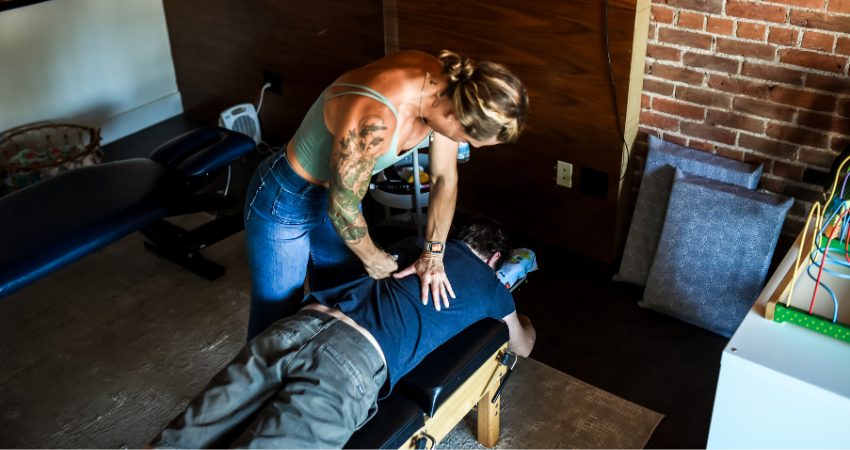
About The Wellness Tribe | Vitalistic Chiropractic in Denver for Performance Enhancement
The Wellness Tribe is a Denver-based chiropractic practice founded by Dr. Maggie McInnes, a vitalistic family, prenatal, and pediatric chiropractor. Located on South Pearl Street in the heart of Denver, Colorado, The Wellness Tribe offers holistic, gentle chiropractic care for the whole family.
We specialize in prenatal chiropractic care (including the Webster Technique), pediatric chiropractic, family wellness, and performance-based care. Our approach is rooted in the belief that your body has an innate intelligence and ability to heal when it’s functioning optimally. We’re passionate about empowering individuals and families to live life fully, healthfully, and wholeheartedly.
At The Wellness Tribe, we create a warm, welcoming space where you feel heard, supported, and cared for. We take the time to understand your unique needs and goals, and we partner with you to create a personalized care plan that supports your health and wellness journey.
Whether you’re an athlete looking to optimize performance, a parent seeking care for your child, or someone navigating pregnancy and postpartum, we’re here to support you.
Ready to learn more? Visit us at the-wellness-tribe.com or contact us to schedule your first visit. We’re located on South Pearl Street in Denver and serve families and athletes throughout the Denver metro area.
Perform at Your Best
You train hard. You’re dedicated to your goals. You deserve to perform at your best and stay healthy in the process.
Chiropractic care can help you optimize your body’s function, prevent injuries, recover more effectively, and reach new levels of performance. Whether you’re dealing with an injury or simply want to move and feel better, we’re here to support your journey.
Schedule an appointment today to learn how performance-based chiropractic care can help you reach your goals.